Featured

About Me

About Me Model Mayhem

Hi everyone , my name is Jessica. I am from China and I came to America in 2012. I had been living in Mountain View for five years because my son went to Mountain View High School. I moved to Saratoga last year after my son graduated from high school. He currently attends San Jose State and I was very proud of him that he was able to graduate and attend an American university since he knew so little English when we came here.  I was secretary in an appliance repair office when I worked in China. When I came to America, I couldn’t do a similar job because of my English was poor.

I like talk to people and make more friends so we can help each other since living in America is not easy for a recent immigrant. I also like cook foods of different kind of cuisines when I have time at home. I can cook any kind of Chinese food such as hand made noodles, dumplings, fried rice.  Also I can cook Spanish food like seafood paella and Italian pasta. My favorite type of exercise is dancing Zumba at my gym. I feel really relaxed when I am dancing, it’s a good workout and it can also release my stress. I regularly attend Zumba dance classes 3 times a week.  Sometimes I lead a dance song for the rest of the class.

I’ve attended Foothill College for one and half years because I really want to improve my English and get a better job instead of low paying jobs I had before. I chose nursing  as my major because I like to help people and also I can get good benefits from a hospital. It can also help my family get a good insurance plan. I always make effort in every class I want keep my GPA high and get into a program. I hope after four years later my life will different than right now so I can help others and their families, especially those who come from simple backgrounds. For this goal, I will study hard to realize my dream. I’ve never done blogging but hope I can do it later.

I love cooking!


The Most Important English Class in My Life

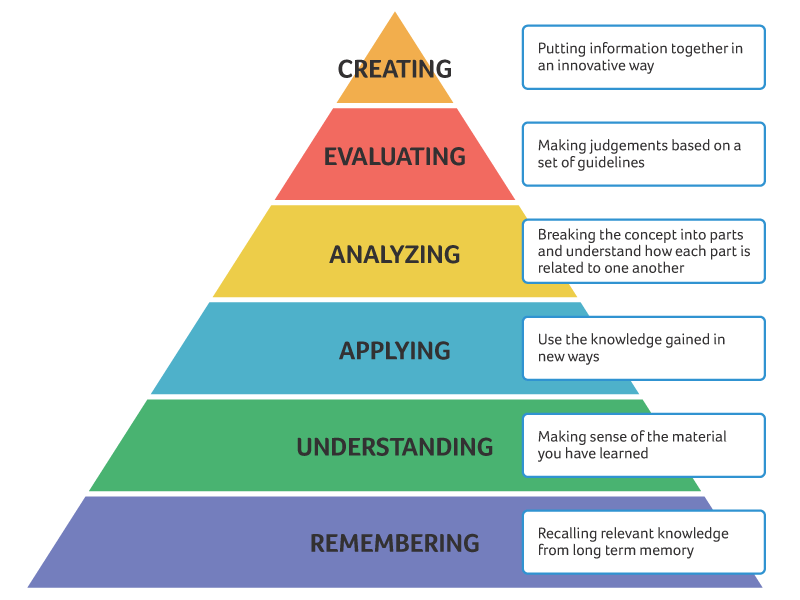
Blooms#2

     I have learned many essential elements for writing quality English from the assigned writing essays, reading, in class activities, and book group discussions throughout this quarter in English 1A.  I improved my reading skills and enhanced my critical thinking from the Sociology text book, articles, and especially the book our reading group chose, “Educated: A Memoir” by Tara Westover. Most importantly, I learned the process of how to write a good essay. Additionally, I learned that structure, form, and flow are essential to hook a reader’s attention to one’s essay. The paragraph concept of PIE – Point, Information, and Explanation – was essential in forming my knowledge on what a proper writing should be.  This course taught me a lot of reading and writing skills that will help in my future course work and even my career work in the real world.

      Two reading sources really stood out for me in this course. Our class textbook, “Introduction to Sociology” and our reading book, “Educated: A Memoir”, were essential reading sources for this course. Most importantly, the group reading we chose was very inspirational to me. Tara Westover’s story in her book “Educated” was similar to my own life experience since the she lost the chance to get a proper education in her childhood, but she overcome her barriers and achieved her goal. She became successful in her journey to become educated. Her spirit, effort, and determination give me the energy to achieve my goals.  Additionally, the textbook reading about sociology was very important since learning about the three different sociological theories gave me perspective to look at society in different ways. The textbook helped my critical thinking because I was able to frame my essay ideas within known theories. These perspectives helped me to think critically. At the beginning of this class, I was worried about my English ability since this was not just a grammar or vocabulary course, but one that required me to understand how to write. Reading these books not only helped my understanding to think about writing, but inspired me to write.

      Learning the PIE structure as a tool to understand proper writing was very important in helping me understand how I should organize my paragraphs.  Strong topic sentences in the point, relevant information in the middle, and a succinct and integrated explanation are elements I learned in this course. The topic sentence should reveal main point of the paragraph and also very clearly to answer the thesis. In class I practiced putting sentences in right locations in the PIE context.  The instruction also helped me to know how to put information and explanation in a paragraph. I didn’t know this framework in my previous English classes.  I know now how to use the PIE form in essay body paragraphs.  Understanding this process and structure for my writing will be very essential for my next English 1B class.

     My writing skills have improved tremendously because I had a lot of writing assignments.  I had six hard essays that were the main part of my grade so I had a lot of incentive and time to practice writing.  Initially, I was stuck in how to start and I was confused about the writing process. Even though I already knew something about the writing process from my previous English class such as understanding the prompt and making an outline, I still felt I needed to learn more techniques.  In this class, the teacher use different strategies including constantly writing in our journals, and letting every student evaluate others and themselves when the first essay draft was submitted. The strategies of continuous practice and the student evaluations helped me understand where I needed to improve.

      I learned specific techniques and from other examples in order to write better. In my first in class essay, I got a low score. I didn’t exactly know which parts were weak and how to improve them. When I read the good examples of native English writers handed out by the teacher, I then began to know which areas I needed to push myself to improve.  Additionally, from the comments of other students, combined with the teacher’s lecture I began to learn about how controlling ideas are important in the thesis, how to organize and develop the body paragraphs, how to quote, and how to make the whole essay smooth and cohesive. My subsequent essays were much better. I was very proud of my 4th essay, “Education Creates Identity”. I got a much better score from other students and my teacher. I reworked this essay many times to the point I felt confident in what I wrote. I know it wasn’t perfect but since I am a foreign student, but I feel my writing skills improved tremendously from this class. 

     I have learned many importing writing essentials from this English 1A class – critical thinking in the context of a broader (in this class, sociological) theory, continuous practice in reading and writing, paragraph and essay structure, and most importantly the inspiration to write in topics important to me. The main benefits of this course to me are how to improve my reading with practice, how to organize my thoughts, how to structure my writing, and how to develop a consistent process in creating good, thoughtful essays. I will use these important tools and techniques in my next class, English 1B, and my future career. 


Obstacles and Their Solutions in American Education

Helpfish-jumping-out-of-bowl-1725x810_14378

25507A33-46E0-4789-B374-4CC2F55B5F98

Education plays an essential role in society and is the basis in which we learn about the real world, become socially aware, and most importantly shape our identity. It influences our personality, helps us understand who we are, and can inspire or discourage us in achieving our future goals.  Being educated can make us better citizens not just within the society we live in, but in interacting with cultures and ideas that are different from us. However, there are obstacles to a comprehensive education in America.  Homeschooling, although being very popular in America, is an obstacle for some because of denial of a comprehensive education and religious extremism. One obvious obstacle is resources and funding because in our society the community in which we live in greatly influences the resources that are available to the K to 12 grades.  Also, the decision to socially promote students or not who may not be 100% academically ready for the next grade is an issue that requires attention as this it affects many disadvantaged students. Our society needs address these obstacles and find solutions for them to insure educational opportunities for all children.

     Homeschooling can lead to diminished social skills and even criminal behavior when children lack the understanding of society’s norms. A structured formal education outside of the home can be beneficial for children whose parents aren’t capable of teaching them the right way and/or are facing their own problems. In “Educated: A Memoir”, Tara’s brother Shawn is a good example of what problems homeschooling can create. Shawn was taken out of regular school early in life school because his bipolar father was afraid of the Government run school system. Since he never got a normal education, he lacked the social skills and didn’t know what normal behavior is in society. He was jailed for fighting when after he left home at seventeen. As a result, he had to go back and live with his parents. He also had strange views of what should be normal behavior for girls. For instance, he thought Tara was a ‘whore’ using eyelashes and mascara. Chapter 13 of the book recounts the most horrifying incident in which Shawn chokes Tara, nearly killing her in front of their mother.  He sees her “prance around Charles (her friend) like a prostitute” (Westover, pg. 116) triggering an extreme violent reaction.  Like his father, Shawn thought young girls dressing up were like prostitutes. An isolated upbringing which includes homeschooling combined with parental mental problems and religious extremism can cause antisocial, abusive and criminal behavior. Socialization of children in a broad, open school environment is an essential role of education to prevent this type of behavior.

      Homeschooled children are at a disadvantage as they go through the educational system because they don’t learn the most basic knowledge that is available to most students in a structured private or public school.  In chapter 17 of “Educated: A Memoir”, author Tara Westover details her struggles at Brigham Young University. In her first year at BYU she thought her American History class would be easy, but her father only taught her the simple basics of the Founding Fathers. She couldn’t understand the class since her professor taught the “philosophical underpinnings”. She was taught basic facts, but never had an understanding of what it meant.  The most dramatic and damning indictment of her homeschooling came in her Art History class in which she said to her professor in front of the class she didn’t understand the word “Holocaust”. Her friend in the class thought she was joking.  Being homeschooled she was never taught its meaning. Later she was so ashamed not understanding the scale of 6 million people being killed in one of most important events of 20th century history she never raised her hand in the class again. Her homeschooling was a result of her father’s fundamentalist religious perspective based on ‘God’s wishes’ saying, “Homeschooling was a commandment from the Lord.” (Westover, pg. 156). Homeschooling can lead to a substandard education and feelings of shame and embarrassment as in Tara’s case. A structured formal education would prevent these problems.

      Society should create rules and laws that address the issues homeschooling can cause such as lack of socialization, the ability to work in groups, and few social networks. “Educated” author Tara Westover was denied the chance to go to a regular school in childhood. She then faced a lot of problems in her first year at BYU. If she had the ability to control her education in her childhood, she wouldn’t have chosen homeschooling by her father. If her brother Shawn attended regular school he would’ve learned socialization skills that could’ve prevented his violent behavior.  In the article, “The Civic Perils of Homeschooling.” Rob Reich says a possible risk from homeschooling is that children and parents can just do what they want; they will lose the ability to learn how to obey or respect others. His point is that whoever gets homeschooled won’t be a good citizen in America. His concern is homeschooled children “are least likely to share common educational experience with other children.” One possible solution is provided in the paper, “Homeschooling: Depriving Children of Social Development?”. The author says: “Child development specialists advise homeschooling parents that they should make room for activities outside the home.” Outside activities like Girls/Boy Scouts allow children to socialize with others. School sports teams are allowing homeschooled kids to participate. It should be a requirement that homeschooled kids participate in outside activities and that public schools include them to improve their socialization. The cost to society for children to miss out on these skills is too great to ignore.

      The issue of homeschooling is specific to a small portion of society, but school funding is much larger societal obstacle for equal education in the United States because the quality of education is often dependent on the school district where one lives. Children who live in the wealthy areas have better public schools, higher per pupil spending and receive better education. The wealthier districts pay teachers more so they get access to the best teachers. The funding problem is common in America and especially in our local area. For instance, Palo Alto is one of the most expensive cities in the Bay Area and has some of the highest test scores and student funding in their schools. The housing there is so expensive most people couldn’t afford even a rental. In the online article, “Inequity in Funding of Public Education Raises Justice Issues” John Allen shows that governments in rich areas provide more funding so wealthy people’s offspring have a greater advantage. He writes, “In American public education, the status quo is a system that explicitly favors the offspring of the wealthy over poor and minority children. Because local governments provide almost half of the cost of K-12 education, differences in wealth among communities translate into disparate levels of resources for schools.”  Clearly in America’s public schools there exists a system of unequal funding which perpetuates class divisions and inequality. Excellent students lose an opportunity to get into a good school because their parents are poor. It is unfair for them and also society loses the full potential of a talented person. Equitable funding on the both the State Federal level for all school districts is needed to address this problem and should not be the primarily addressed at the local level.

       Though the funding obstacle to equal education is a severe problem in American public schools and a comprehensive funding solution is longer term goal, we can still find ways to overcome this barrier and give poorer students a better opportunity.  In the “Introduction to Sociology” textbook chapter16, “Education,” the authors outline programs that are very useful to assist poorer kids to get better education. Programs such as Head Start and Charter School are possible solutions.  Notably, they state: “The federal Head Start program, which is still active and successful today, was developed to give low-income students an opportunity to make up the pre-school deficit discussed in Coleman’s findings. The program provides academic-centered preschool to students of low socioeconomic states”(371).  This program gives pre-school children of low income families an opportunity to participate in academically oriented classes which can overcome learning deficits. They add another possible solution: “Charter schools are self-governing public schools that have signed agreements with state governments to improve students when poor performance is revealed on tests required by the No Child Left Behind Act.” Charter Schools can give the opportunity for students of less well-off families to receive a quality and even specialized education as wealthier families as “some charter schools specialize in fields, such as the arts or sciences, while others are more generalized”(372). We should support programs such as Head Start and Charter Schools at the Federal, State and local levels. Innovative programs like these are a way to address the problem of unequal funding of schools.

      Another area holding back disadvantaged kids is mandatory retention which forces the student to repeat a grade if certain requirements are not met. Most people view mandatory retention as necessary if a student’s grades are very poor.  However, others have the view that the student should not stay in same grade because those students will create problems for other students. Upon further research, it becomes clear if a student didn’t learn enough from the class and can’t quite pass the grade, it’s not necessarily their fault and they would put less effort for their education if held back. In the online article, “Beyond Grade Retention and Social Promotion,” the authors say retention doesn’t help students at all and would cause more problems for them. They cite the research that “Holmes (1989) concluded that on average, the retained students displayed poorer social adjustment, more negative attitudes toward school, less frequent attendance, and more problem behaviors in comparison to groups of matched controls.”  Retained students will not have motivation for class. Their negative attitude will create more problems because be affecting others students in school. Their negative social attitudes will be a harmful to society. Mandatory retention is not the right answer.

      Effective instructional strategies are better than just mandatory retention or automatically promoting students. It is much better to evaluate the situation for each student individually. In the article, “Beyond Grade Retention and Social Promotion,” the authors provide thoughtful solutions. Preschool intervention, a comprehensive program to promote social and academic development, summer school and after school programs, parental involvement, early reading programs are all useful to help students to prevent problems beforehand. An early reading program would be quite valuable for students to learn reading skills that would be invaluable later in life. They write, “Reading is an essential skill for subsequent knowledge acquisition; thus, early reading interventions attempt to facilitate children’s reading skills before they fall behind and are subsequently recommended for retention. Structured early reading programs have been demonstrated to promote student success,” To prevent student retention, the strategy of early intervention and promoting good reading skills are essential.  American society should embrace this strategy for disadvantaged children to have a better opportunity in life.

      Barriers and obstacles in the education not only can harm a person’s entire life but creates serious problems for our entire society such as inequality in education, anti-social, abusive behavior, and class disruption in schools. There are solutions and alternatives to the problems created by homeschooling, lack of equitable funding, and mandatory retention of disadvantaged students. One of the significant social theories, Functionalist theory, views that education equips people to perform different functional roles in society.  But unless the obstacles to educational are addressed, the functional roles needed for a harmonious, well-functioning society will be lacking and society itself will break down.  Since education is so fundamental to society, it’s imperative that America addresses the educational system’s shortcomings to provide a better life for all children.


Works cited

Griffiths, Heather, et al. Introduction to Sociology. 2nd ed., Openstax, 2015.

Westover, Tara. “ Educated: A Memoir” Random House.  2018.

Reich, Rob. “The Civic Perils of Homeschooling.” Educational Leadership, vol. 59, no.      7,                Apr. 2002, p. 56. EBSCOhost, ezproxyfh.fhda.edu/login?url=http://search.ebscohost.com/login.aspx?direct=true&db=a9h&AN=6530555&site=ehost-live.   

Lebeda, Samantha. “Homeschooling: Depriving Children of Social Development?” The Journal of Contemporary Legal Issues, Spring 2005, pg. 104


Allen, John. “Inequity in Funding of Public Education Raises Justice Issues. (Cover     Story).” National Catholic Reporter, vol. 33, no. 26, May 1997, p. 3. EBSCOhost, ezproxyfh.fhda.edu/login?url=http://search.ebscohost.com/login.aspx?direct=true&db=a9h&AN=9705186069&site=ehost-live.

Jimerson, Shane R., et al. “Beyond Grade Retention and Social Promotion:           Promoting the Social and Academic Competence of Students.Psychology in the Schools, vol. 43, no. 1, Jan. 2006, pp. 85–97. EBSCOhost, doi:10.1002/pits.20132.


The Significant of Sociological Theory

0-sociological-theories

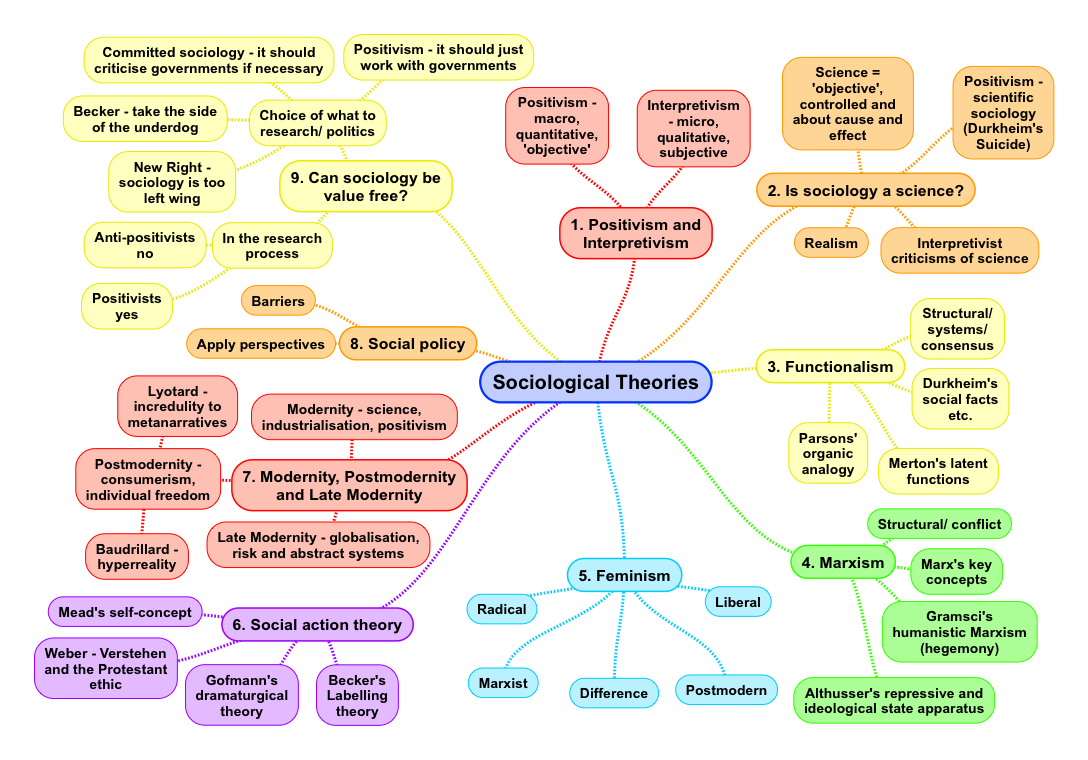
Sociological theories are declarations of why and how extraordinary facts about the social world are connected. They are the core of the concepts to predict, explain and describe how the society relates to everyone individual’s life. In the assigned text, three general paradigms of sociological theory for scientific exploration in sociology are examined and analyzed. It brings together a wide scope of perspectives to offer the fullest picture. Two theories are macro-level – dealing large numbers of people – they are the conflict and functional theories. One micro-level theory – dealing with small groups – is symbolic interactionism. Although we have the freedom of the religion in America, a person’s religious fundamentalism can cause great societal issues that each of three sociological theories can provide insight to.

        The social conflict theory views society as a system of the powerful that treats various groups unequally. We can find many inequalities in our real life. In the text “Social Theories”, the author explains the Feminist theory as primarily a part of Conflict Theory and writes “Feminist theorists are interested in the inequalities in opportunities between men and women.” Women want equal rights as men but in their social roles, women are often subservient. For example, in the book “Educated: A Memoir” in chapter 1, the author, Tara Westover, writes “my father was not a tall man but he was able to command a room.” From this point and the subsequent passage, we can figure out in her family there exists gender discrimination since her mother never had her own point of view for the family and she can only listen to her husband who is basically the dictator of the household. The conflict theory of this example is very common with religious fundamentalism in that wives/mothers had few rights or authority compared to the husbands/fathers. 

       Functionalism theory views society as and interconnection of functional parts working together as a complex system. It believes that all useful parts come together to make a stable, cooperative, and harmonious society. For instance, our body has a heart, liver, brain, arms, eyes, legs etc.  All of them should be working together for normal body since each individual part has own importance. In the text “Social Theories”, the author states “Functionalists can better understand how society remains stable or adjusts to destabilizing forces when unwanted change is threatened.” Based on this passage, individual behavior can influence the whole community thereby making the collective stay stable or be threatened. It is also related the book I chose “Educated: A Memoir”. The author said she never attended school since her father had a radical perspective on his religion. Her father believed that America public schools couldn’t teach the kids in the right way and sending his kids there would be “surrendering them over to the Devil”. He deprived his children of getting a good education. So his children wouldn’t be able to contribute to society since they had a poor education. His fundamentalist religious view caused a social imbalance between his family, the Government, schools and even others in his community who didn’t share his beliefs. 

        Symbolic interactionism theory says society is made up of small groups interacting sharing the same symbols and meanings.  The use of food in a religious context can show how strong these symbols and meanings can be. With this understanding we can think about how individual choices affect society.  From my chosen book, the author describes her father reading a Biblical passage over and over again: “Butter and honey shall he eat,…That he may know to refuse the evil, and choose the good.” He then commands the whole family to eat the butter and honey (good) with breakfast and he threw away all the milk and dairy products (evil) from the fridge. This is a good example to show the negative symbols group members share even in their particular diet. It is a choice of good vs. evil. Returning to the text, the Thomas Theorem says “if people perceive or define something as being real, then it becomes real in its consequences.” The father perceives evil to the point of forcing the family to eat a certain way.  Even his own mother disagrees with him and invites the author (his daughter) to her home to eat milk with cereal for breakfast. The grandmother eventually helps the author leave her father’s home. This is a good example of how perceptions, even if they are not real, can have serious social consequences.

       From the above sociological theories, we can see each one has different characteristics that can alter our view of society. We can use the different theories to give us unique insights about a particular situation and also the interaction between individual behavior and the consequences to the whole society. It is useful for everyone to study these theories because there are benefits to both individuals and society. In studying where and how societal dysfunctions occur can figure out the solution to better improve of in our real lives. From these examples and the insight that the sociologic theories give us, the author’s father’s fundamentalism led to societal dysfunction. This book is very relevant in understanding sociology!

The Value of Sociology

1200-231940-importance-of-sociology-2

Everyone’s daily life could not be lived by themselves since most of what we do is related the society.   Your behavior, thinking, and feeling all depend on the environment, culture, religion, politics of society at that time. The broader society can obviously constrains an individual’s behavior. We can’t do certain things without society’s permission. You think that your personal behavior never bothers others but sometimes that’s totally wrong; you are always doing things that impact others or society at large. Prostitutes and their men think they are just doing a business deal and think they are not affecting other people. But this is a serious crime violation and is usually not allowed in a country. Although the society forces people to behave in a certain way, the study of society’s culture and beliefs are important and very useful for everyone’s daily life.  So studying sociology can be personally valuable.

Studying sociology is important for different members in society to live in harmony. “People who feel no temptation before closed the doors, who have no curiosity about human beings, who are content to admire scenery without wondering about the people who live in those house on the other side of that river, should probably also stay away from sociology.” (Invitation to Sociology, Peter Berger, pg .3)  In his article, Berger points out people who don’t pay attention to other people and only personal actions never care about others.  He says studying sociology is very useful to help you improve yourself. As a result, people will like you more and you will be welcome with others. From his article, I learned how to regulate personal behavior and don’t let others abominate it is very useful to me and I know I will use to myself daily life.

Besides personal behavior can impact whole society it can also violate the law, it would be very serious issue and force your action to stop or get punishment. “If I attempt to violate the rules of law they react against me so as to forestall my action.” (What is a Social Fact?, Emile Durkheim, pg. 1). Durkheim says if the personal action is against the law and you will pay the penalty of what you did or you will get irreparable harm in life. This punishment will cause your normal life to become messy and you will never do it again. From Durkheim, I learned we have to restrict our actions to follow the law from social society to make society more peaceful. Therefore, I learned this lesson applies for my personal life.  I think about if I offend the law my family will be in shame and I won’t want to be in this situation in my life.

In addition, studying sociology can give us a better understanding of mankind and how to cope with the life’s problems and apply to personal lives or help others lives. Through several readings from these two weeks of sociology, I learned why we need to study sociology and how sociologists use the appropriate method to study in the right way. Nowadays people feel being trapped in their personal lives.  When their society has major changes, their personal lives change. The rules of the sociological method can affect social fact from the external to the individual. Personal acting, thinking and feeling are never separate with society. The sociologist’s interest in societies, their institutions, their history, their personal situation is a passion. A sociologist is curious about all parts of society even the ones that everyone else dislikes. What we studied, I believe is true and immediately useful to my life. Thus, I think sociology is a huge value to my life.

From above we observe it is very clear studying sociology is very useful for everyone’s life since sociology gives us insight about human beings real everyday lives. You may still doubt its value or are confused on some part of sociology. As I studied the sociology I have very positive outlook for society so this subject is useful for my life and think it will be useful for everyone else. Since many of us are from different backgrounds, cultures and countries, sociology is an important tool to bridge our differences and make society more harmonious.


Kawaii Subculture Essence

      Culture plays a very important role to reflect a society’s value and norms. It also provides a lot of opportunities for some people who want to create and express their own tastes and world view. Groups that create their own culture display their values, beliefs and rules different from the main culture are called subcultures.  Japan has had a great influence over many young generations since the 70s directly and indirectly. Other countries including the United States have been influenced by the Japanese culture in many ways and in different fields and disciplines: food, comics, animation, art, architecture, design, furniture, ceramics, crafts, games, fashion, cinema, theater, literature, music and language.  It is not considered a rebellious counter culture, but one that embraces the larger society’s views on togetherness and harmony even political field. Its popularity has now spread throughout the world. The Kawaii subculture’s essence which promotes harmony, peacefulness and cooperation in society has become pervasive and its influence in music, fashion, commercial marketing and even politics has spread throughout the world. 

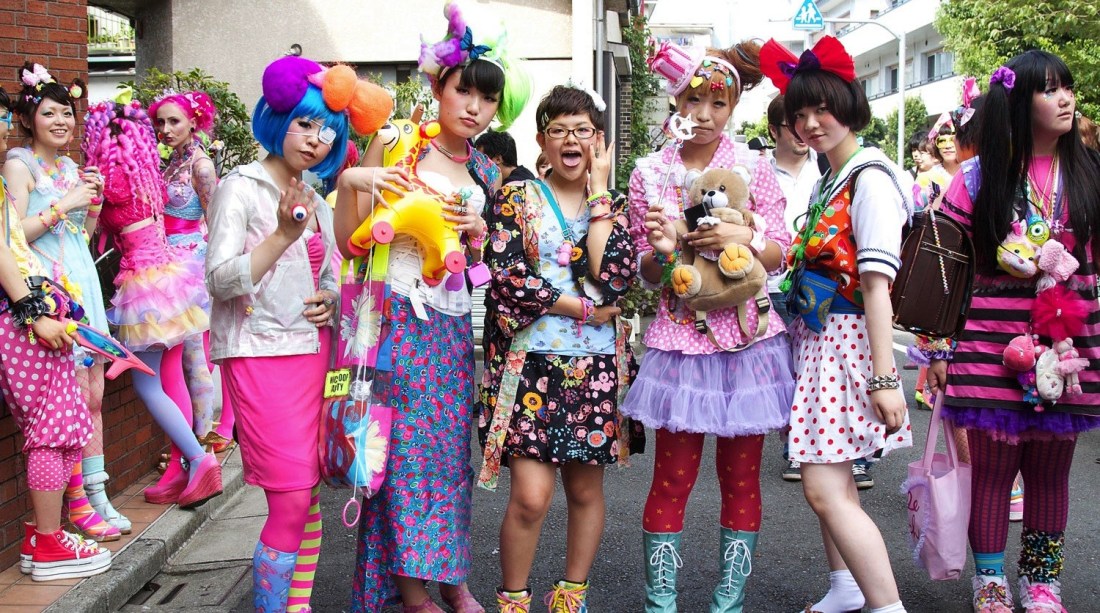
      Kawaii is a unique subculture that changed Japan with their nontraditional style and fashions starting in the 1970s. In the beginning, Kawaii had its start not in fashion but in drawings and illustrations. The first Kawaii illustrator is thought to be Yumeji Takehisa (1884-1934).  He mixed Western and Eastern art styles using round eyes in his illustrations.  In that time of pre-war Japan, though, Kawaii meant people were of lower social status. After the World War II as more illustrators were women, the Kawaii characters had positive traits such as confidence and inner strength which attracted young schoolgirls. In modern Japan cuteness is a very prevalent part of the culture. Cute child-like dress is used more than just a form of expression. The word “Kawaii” is derived from a phrase that means “a radiant face” which refers to the blushing of an embarrassing person. Over time, the meaning has been twisted and replaced the word “cute” in Japan. According to Paul Ratner, “Japanese pop culture features such as ‘Lolita fashion’ is very a popular trend that even Westerners have come to expect it of Japanese girls.” Young women dress in clothes similar to those worn by children in Victorian-era England. Looking like children and dolls they display cuteness and innocence, but there’s also a forbidden sexual connotation. Even men take part in the culture of cuteness. Some shave their legs to look young and male singers and actors have long hair. Young Japanese women prefer a round face with large eyes. Some women want to have round  eyes by wearing large contact lenses. By looking like children they’ve built their own type of fantasy world perpetuating an eternal youthfulness and innocence.

      Every subculture has an iconic figure that becomes symbolic of its philosophy of life and Kawaii is no different.  One of the most iconic worldwide fictional characters, Hello Kitty, the urban cute fictional character that represents cuteness and success to the prevalence of the Kawaii culture in Japan was first created in 1974. As an icon and artifact of the Kawaii subculture, Hello Kitty, was first drawn by illustrator Yuko Shimizu for the Sanrio Company. This image was first used on a girl’s coin purse and since then has been one of the most valuable commercial manifestations of the Kawaii subculture.  The character is thought to represent a 3rd-grade schoolgirl since the original target audience was preadolescent girls.  It is a very cute kitten waving but has no mouth. The idea of the character is universal; it is greeting the viewer but has no mouth because it because according to Sanrio she “speaks from the heart. She’s Sanrio’s ambassador to the world and isn’t bound to any particular language”. Since its creation, the target audience of Hello Kitty’s commercial scope has expanded to teenagers, adult women, and men.  Hello Kitty is the one of the most popular brands of all time with revenue exceeding $50 billion. Hello Kitty has been used on clothing, toys, anime, and music.  There’s even a Hello Kitty jet plane!  So the cuteness of Kawaii has a broad-based appeal for its openness for cultures worldwide.  Also around this time in the early 70’s, even young Japanese girls began writing in cute style using rounded letters and adding hearts or stars – a sharp break from traditional writing.  This was an important development for teens creating a distinct identity.

      Kawaii music has its own style.  Perhaps one of the most well-known singers of this style is Kyary Pyamu Pyamu. She is most famous for the hit ‘PON PON PON’ made in 2011 and has more than 140 million views on Youtube. This music is full of electronic and visuals effects in the Kawaii style.  It is both a strange and cute song and video.  For many, it’s a ‘love it or hate it’ type of artistic expression.  Some may think it is trivial and really annoying in its electronic sound; others may think it’s artistically on the cutting edge of representing Japanese youth culture. An important subculture is one that provokes sharp opinion whether in favor or against it. Kawaii music definitely fits this definition.

      Kawaii plays an increasing role in promoting harmony in Japanese society. People can see signs of it everywhere in fashion, pop-culture, and merchandise. Even staid financial companies have Kawaii mascots. The article “Kawaii: The Japanese Culture of Cuteness” explains why this cuteness is so pervasive: “Some believe it is rooted in Japan’s harmony-loving culture and their desire to avoid conflict.” Being cute is non-threatening and is a sign of being willing to cooperate. The way the word Kawaii is written in the Japanese alphabet means “able to be loved”. This stands in stark contrast to the old image of Japan as a “samurai warrior” culture. American society should more and more adopt the Kawaii aesthetic.

        Kawaii has even influenced the political realm by using cuteness and positivity to combat evil, negativity, and extremism in the world. In 2015, as a response to the beheading of two Japanese journalists by ISIS, a character called ISIS-chan was born on social media.  Instead of revenge, cuteness was used to combat the widespread propaganda of ISIS.  She was a girl dressed in black jihadi garb and described as “a so kind girl with a broad mind, who never hurts anyone in any way. She won’t represent any of your extremist thoughts. ISIS-chan loves melons, not violence.”  Although she didn’t succeed in overwhelming the real ISIS presence on social media, ISIS-chan represented the idea that the positivity of Kawaii could combat evil.  In that regard, there’s even Kawaii Trump imagery combatting the negativity of the current US President.  A popular social media meme has Donald Trump pictured in various Kawaii styles.  This is clearly meant as a political criticism and satire of Trump.  The imagery portrayed reduces Trump to an infantile, girlish, non-threatening caricature as opposed to his intentionally divisive political self. As we can see the Kawaii subculture and aesthetic is even being used to counter very serious political issues and personalities.

      For many decades especially since the 1970’s and 80’s when Japan rose to be the 2nd largest economy at that time, the image of Japanese culture has been that of the Salaryman. They were mostly men but also some women who worked in white collar jobs for very long hours (more than 60 hours per week) for either big corporations or the government bureaucracy. Their life was centered on their work and they had little time for their families. But the widespread image of Kawaii has changed this perception. According to Dr. Sharon Kinsella, a lecturer at Oxford University on Japanese sociology, “cute has become a new national style….It is being used diplomatically and in fine-art circles to promote Japan.” This is a remarkable turnaround in cultural perception of Japan as dull and only concerned about work to a people embracing a form of expression that promotes a harmonious and peace-loving culture.

      Kawaii subculture existed in Japan since the early 70s, though its style was evident early in the 20th century. Starting out as cute Westernized illustrations of women, it has influenced handwriting, dress, and music more or less across the globe. Overall, its influence has not only spread into the mainstream in Japan but also it made its way to the West. The Kawaii subculture is an expression of innocence, charm, happiness which is a reflection of Japanese culture which emphasizes social harmony. It has grown into a worldwide phenomenon also influencing commercial marketing, and even politics.  Considered a counter-culture phenomenon like the Hippies in the US in the 1960’s, its emphasis on positivity and harmony will have greater and wider and more long-lasting effect.

Works cited

                   culture/what-is-kawaii.

  • Clarke, Ashley. “How Kawaii culture is changing the world”.  Web.  23 December 

                  2015.

  • Ratner, Paul. “Why do the Japanese Love Cute Things?”. Weeb. 30 May 2016.

                  https://bigthink.com/paul-ratner/why-do-the-japanese-love-cute-things

  • Japan Transforming Its Innovation Culture by Changing Social Norms, Stanford      Scholar Finds, 31 Aug. 2016, news.stanford.edu/press-releases/2016/08/31/japan-transforminovation-culture/.
  • Writers, YABAI. “Japan’s Culture of Kawaii and Its Modern Implications | YABAI –     The Modern, Vibrant Face of Japan.” YABAI, yabai.com/p/2698.

Education Creates Identity


north-west-college-nursing-school-los-angeles

       Society often imposes upon us many identities that are either demeaning, inaccurate or both.  Therefore we are faced with a situation in which we have little control on how society views us. However, our knowledge and education can have a life changing impact on society’s perception of ourselves and the way we are treated in everyday life.  By one’s determination to become educated we can unshackle ourselves from the negative identity given by society, create new identities for ourselves, and attain goals that have positive impact on our lives and those around us.  The major sociological theories of conflict theory, functionalism, and symbolic interactionism have played a role in explaining how the broader society I was living in shaped my life and my identity.  At each stage of my life, these theories were relevant in explaining my own role and how I was perceived in society.  However, it is through my desire and attainment of a better education throughout out each stage in my life that has been the most important factor in determining in my identity.  While social theories can explain how society views my identity, it is through my lifelong efforts to enhance my education that I have created my true identity.

       I was determined to change my social standing and identity when I was young even though I was considered a simple country girl in China.  Different cultures provide the environment that can enhance the opportunity to get a good education or deprive them of chance to break away from a life of poverty.  I was born in a small town in China outside of a large city.  My parents were of different social status; my mother was a countryside peasant and my father was a city urbanite, but the law was the children had to follow status of the mother. Back then, people who lived in the countryside got little chance to get a good education and the Chinese government gave more opportunities for city residents than countryside residents.  The result can be considered of the conflict theory of society, but with an unusual twist. Previously Mao, of course, studied Karl Marx, and he believed that the laborers or peasants needed to rise up against the bourgeoisie.  But in my time, the thinking was the peasants had too much power and it was time to give city dwellers (some of the bourgeoisie) more benefits.  I was excellent student when I was young but I still had to drop out of high school since I wasn’t a city resident.  I was sad but determined to continue my education, so I still studied constantly on my own.  I had no chance to get a higher level career in China. My situation also fitted the functionalist theory view of society since there was a societal imbalance that needed to be changed. Although the society limited me, I was determined to educate myself and not be bound by those limitations.

       I couldn’t speak English when I came to America and I had low self-esteem, but I was determined to learn, acquire a new skill and create a new identity for myself. Lacking the language skills to communicate with other people can cause many problems in our real life; it also can influence your career since people assume you are ignorant. I have a good memory of an experience I will never forget related to my poor English. When I first starting working at an America company I was an esthetician. Even though I could speak little English, I got the esthetician certificate on my own since I studied so hard. However, I still faced problems at my job. One day, my manager called me to meet her at her office; we were talking about my health insurance but I felt I didn’t understand what she was saying. I wanted her to explain more about what she was talking about, but she had no patience and told me “if you cannot speak English you should bring an interpreter for you.” Her tone was filled with disdain. I felt a sense of low self -esteem because I couldn’t have normal conversation with her. I couldn’t stand this kind of situation and so I had to leave the company. Symbolic interactionism theory can explain my issue – I didn’t know how to use the English language to communicate with others as a result I had an inferior social status.  But I was more even more determined after this incident to further educate myself and change how I was perceived in society.

      Being a student at my age changed who I was from compared to the past.  American society can give everyone equal opportunity to get an education without the limitations of age, race or previous background. At my age in China, it is impossible can go back to school to become an educated person. To do so is considered socially unacceptable because people would feel very odd or awkward if you are old and still sitting at the classroom talking to the teenagers about the class. Now I have a great chance to achieve my educational goals and change my life and career. The social theory of functionalism would view my social role has changed because now I’m a student. Although I still face language problem, my English has improved a lot because I’m a full time student. In the textbook chapter 5, the author views one can change your old status to fit your new life. He writes “after new members of an institution are stripped of their old identity, they build a new one that matches the new society” (113). Everyone can have a chance to change their identity and follow the culture and rules even in a new society.  The role of being a student changed my identity and makes me excited to get a good opportunity.

      My effort to continue my education in America has given me more respect and standing in American society. Since I joined Foothill College my English has improved to the point where I have a lot of confidence to talk face to face with native speakers. Being knowledgeable can have advantages. A recent example illustrates the value of education. I called one American company a few days ago and asked the boss if I could work there part time as an esthetician. She replied very quickly, complemented me on my English, felt happy if I could work there and asked me to talk in person about my salary. I heard from my friend, who doesn’t speak much English, didn’t get the same opportunity as me and was offered a lower salary. My long-time friends are surprised and impressed with me because they didn’t believe I can be a good student at my age. In the article, “Perspectives on Identity” by Hike vom Orde, talks about personal identity; one famous sociologist Erving Goffman, points out “by the individual to create and maintain a certain impression”(8).You can create a very different identity by yourself to impress others. Functionalism theory also points out that if I want do something in my life I can do it depending on the social environment. Individual identity is connected with society and the opportunity and effort to achieve a higher education is crucial to create an identity.

      I decided on nursing as my major.  Being a nurse is major part of how I see myself in the future. Achieving my educational goal in nursing would be the most significant step in my educational journey from childhood to being an adult. This journey has changed my identity and social standing in two cultures. If I get an RN nursing certificate, my friends in America and China would be so impressed with and happy for me. Making a right decision and imagining a bright future can give yourself a lot of motivation to achieve your plan. I know it is challenging, but I have I lot of energy and am anxious to achieve my goal because I know it will help my family and will fill me with pride. To achieve this target I study diligently every day. In the article, “Perspectives on identity,” by Heike vom Orde, the sociologist David Gauntlett, makes a point which is very relevant to me “…that girl, for example, can be encouraged to be stronger and more independent by action heroines like Lara Croft without needing to copy them”(9). His emphasis is women can be very independent and don’t require others help. This view is very inspiring to me. Functionalism theory can explain my decision since I want to be a strong role model and provider for my college age son.

      I imagine that a nursing career would give me the opportunity to show love to others and establish my identity as an important member of society. Using your knowledge to help other people is the responsibility of every citizen who lives in America and is essential for society to move towards harmony and stability. My goal is I will help other people with my education and realize important values that benefit society. For example, nursing is a group effort working together at hospital to care for people in need. In this environment, I will care for older patients who need love and warmth. Love is one aspect of symbolic interactionism. In the article “Perspectives on Identity” David Gauntlett says that the individual and group are both important to achieve a work identity. Specifically, “Both the individual and the group aspects of work are important, and integrating them might be important in helping individuals to develop a healthy work identity” (9).Regardless whether I work either by myself or with a team I will always have the goal to do the best for the group. This symbolic interactionism makes it possible for me to achieve my value in the society and my work identity.

      The three main sociological theories can help me to understand and explain who I’ve been in the past, present and future. Throughout my whole life education has put me on the road to succeed not only in a different culture, but in my own native culture. My desire for a better education has overcome my past poor career opportunities; it impacts me right now and gives me a lot hope to achieve my goal. It also gives me hope for the future.